Blood Pressure Trend Analyzer
Fast cardiovascular health tracker • 2026 tools
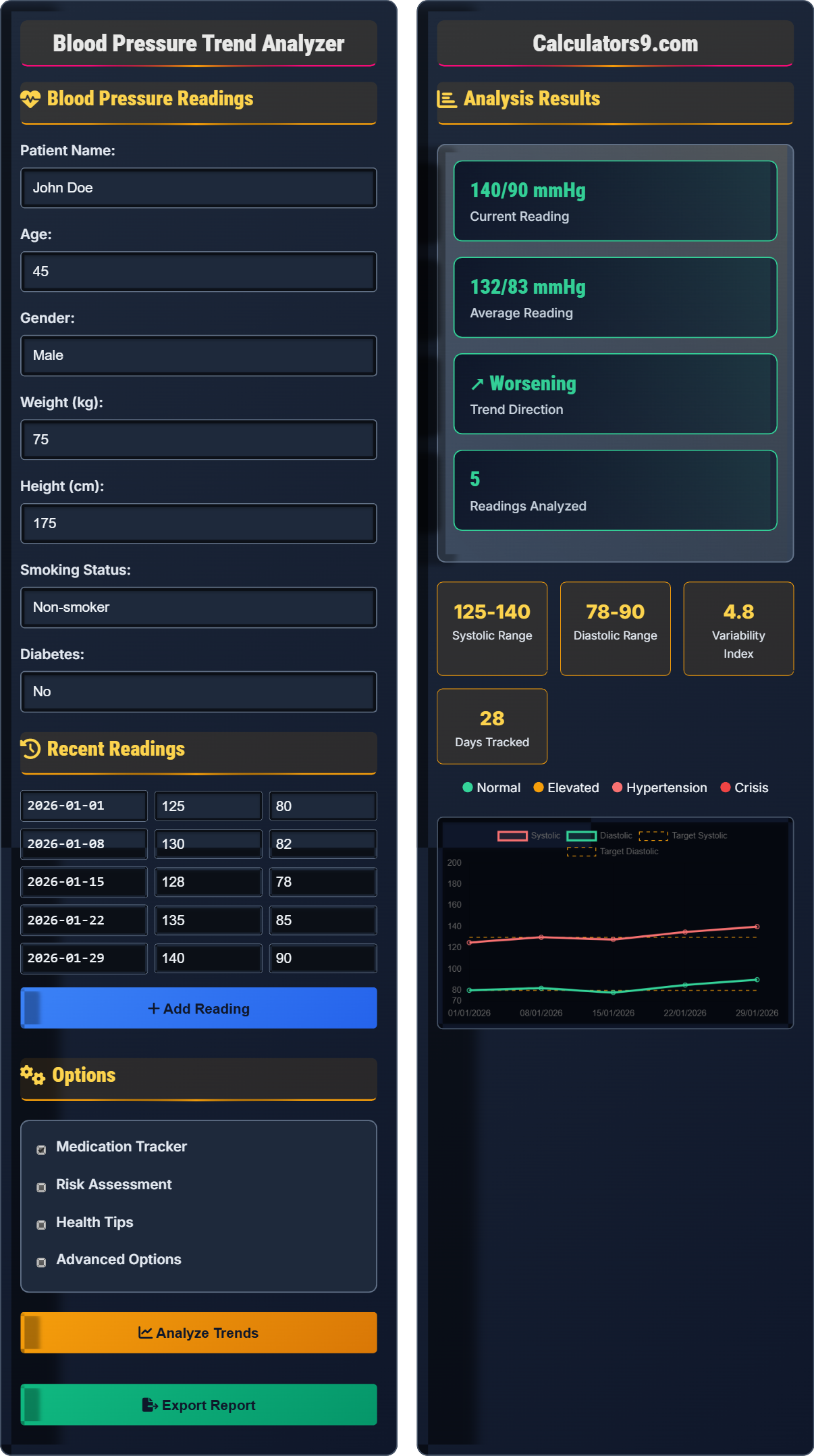
Blood Pressure Classification System:
Analyze TrendsBlood pressure categories are defined by systolic (top number) and diastolic (bottom number) measurements:
- Normal: Systolic <120 mmHg AND Diastolic <80 mmHg
- Elevated: Systolic 120-129 mmHg AND Diastolic <80 mmHg
- Hypertension Stage 1: Systolic 130-139 mmHg OR Diastolic 80-89 mmHg
- Hypertension Stage 2: Systolic ≥140 mmHg OR Diastolic ≥90 mmHg
- Hypertensive Crisis: Systolic >180 mmHg AND/OR Diastolic >120 mmHg
Cardiovascular Risk Formula: Risk increases exponentially with higher BP readings. For every 20 mmHg increase in systolic or 10 mmHg in diastolic above normal, cardiovascular risk approximately doubles.
Example: A patient with readings trending from 120/80 to 140/90 moves from Normal to Hypertension Stage 1, increasing cardiovascular risk by approximately 100%.
Blood Pressure Readings
Recent Readings
Options
Analysis Results
Blood Pressure Categories
Blood pressure categories defined by American Heart Association and ACC/AHA guidelines.
- Normal: Systolic <120 mmHg AND Diastolic <80 mmHg
- Elevated: Systolic 120-129 mmHg AND Diastolic <80 mmHg
- Hypertension Stage 1: Systolic 130-139 mmHg OR Diastolic 80-89 mmHg
- Hypertension Stage 2: Systolic ≥140 mmHg OR Diastolic ≥90 mmHg
- Hypertensive Crisis: Systolic >180 mmHg AND/OR Diastolic >120 mmHg
- Measure at same time daily for consistency
- Rest 5 minutes before taking reading
- Take 2-3 readings and average them
- Track readings over time for trends
- Consult healthcare provider for persistent elevation
Health Management
Evidence-based interventions to manage blood pressure effectively.
- DASH Diet: Emphasizes fruits, vegetables, whole grains, and lean proteins
- Regular Exercise: 150 minutes moderate activity per week
- Weight Management: Even 5-10 lb loss can reduce BP
- Stress Reduction: Meditation, deep breathing, yoga
- Limited Alcohol: Maximum 2 drinks/day for men, 1 for women
- Quit Smoking: Reduces cardiovascular risk immediately
- ACE inhibitors commonly first-line therapy
- Thiazide diuretics effective for many patients
- Combination therapy often needed
- Consistent timing improves effectiveness
- Monitor for side effects regularly
Blood Pressure Health Quiz
According to current guidelines, what BP reading indicates Stage 1 Hypertension?
The answer is B) Systolic 130-139, Diastolic 80-89. According to the 2017 ACC/AHA guidelines, Stage 1 Hypertension is defined as systolic blood pressure between 130-139 mmHg or diastolic blood pressure between 80-89 mmHg. This represents a significant change from previous guidelines that defined hypertension as 140/90.
Understanding current blood pressure categories is crucial for proper health management. The 2017 guidelines lowered the threshold for hypertension, meaning more people now fall into hypertensive categories. This reflects increased evidence that complications begin at lower BP levels than previously thought.
Systolic Pressure: Pressure in arteries when heart beats
Diastolic Pressure: Pressure in arteries when heart rests between beats
Stage 1 Hypertension: Mild elevation requiring lifestyle intervention
• Current guidelines define hypertension as ≥130/80 mmHg
• Earlier detection enables earlier intervention
• Both systolic and diastolic readings matter
• Remember: Systolic is the top number, Diastolic is the bottom
• "S" for Systolic comes before "D" for Diastolic
• The first number is always higher in normal readings
• Confusing systolic and diastolic pressures
• Using outdated 140/90 threshold for hypertension
• Focusing only on systolic pressure
If a patient's systolic pressure increases from 120 to 140 mmHg, by what approximate factor does their cardiovascular risk increase? Show your calculation.
According to the Framingham Heart Study and other research, cardiovascular risk approximately doubles for every 20 mmHg increase in systolic pressure above normal levels.
Change in systolic pressure = 140 - 120 = 20 mmHg
Since the increase is exactly 20 mmHg above the normal threshold of 120, the risk approximately doubles (×2).
Therefore, moving from 120 to 140 mmHg approximately doubles cardiovascular risk.
The relationship between blood pressure and cardiovascular risk is exponential, not linear. This means that even small increases in blood pressure can have significant impacts on health outcomes. The 20 mmHg rule provides a simple way to estimate risk increases.
Cardiovascular Risk: Probability of heart attack, stroke, or other cardiac events
Exponential Relationship: Risk increases disproportionately with BP elevation
Framingham Study: Longitudinal study establishing BP-risk relationships
• Risk doubles for every 20 mmHg systolic increase
• Risk doubles for every 10 mmHg diastolic increase
• Even normal ranges show risk gradients
• 20 mmHg systolic = 2× risk
• 10 mmHg diastolic = 2× risk
• Lower is better within normal range
• Assuming linear risk increase with BP
• Not considering risk below hypertension thresholds
• Underestimating impact of small BP changes
A patient's average systolic pressure was 150 mmHg before starting medication. After 4 weeks of treatment, their average systolic pressure decreased to 135 mmHg. Calculate the percentage reduction in systolic pressure and describe the significance of this change in terms of cardiovascular risk.
Step 1: Calculate absolute reduction = 150 - 135 = 15 mmHg
Step 2: Calculate percentage reduction = (15 / 150) × 100 = 10%
Step 3: Assess cardiovascular risk impact
With a 15 mmHg reduction, the patient's risk decreases significantly. Since risk approximately doubles every 20 mmHg increase, a 15 mmHg decrease represents substantial risk reduction - approximately 40-50% decrease in cardiovascular events.
Therefore, the patient achieved a 10% reduction in systolic pressure, significantly lowering cardiovascular risk.
Even modest reductions in blood pressure can have significant health benefits. A 10 mmHg reduction in systolic pressure is associated with approximately 20% reduction in stroke risk and 15% reduction in coronary artery disease risk. This demonstrates the importance of achieving even small improvements in blood pressure control.
Percentage Reduction: Relative change from baseline
Risk Reduction: Decrease in probability of adverse events
Therapeutic Response: Improvement following treatment
• 10 mmHg reduction = 20% stroke risk reduction
• 10 mmHg reduction = 15% CAD risk reduction
• Even small improvements have significant benefits
• Track trends over time rather than individual readings
• Consistent measurement technique is crucial
• Combine medications with lifestyle changes
• Expecting dramatic immediate changes
• Not considering measurement variability
• Discontinuing medications after improvement
A 65-year-old patient with diabetes has current BP of 145/92 mmHg. Their physician wants to achieve a target of <130/80 mmHg. Calculate the reduction needed in both systolic and diastolic pressures. If medication can achieve a 10-15 mmHg reduction, what additional lifestyle modifications would you recommend?
Current BP: 145/92 mmHg
Target BP: <130/80 mmHg
Systolic reduction needed: 145 - 130 = 15 mmHg
Diastolic reduction needed: 92 - 80 = 12 mmHg
Medication alone may achieve 10-15 mmHg reduction, which could meet the systolic target but may still leave diastolic elevated.
Recommended lifestyle modifications:
- DASH diet (rich in fruits, vegetables, whole grains)
- Sodium restriction to <2,300mg daily (ideally 1,500mg)
- Regular physical activity (150 min/week moderate intensity)
- Weight management (even 5-10 lb loss helps)
- Stress reduction techniques
- Limited alcohol consumption
Patients with diabetes have stricter blood pressure targets (typically <130/80) due to increased cardiovascular risk. Combination therapy (medication + lifestyle) is often needed to achieve targets. Lifestyle modifications provide additional benefits beyond BP reduction.
DASH Diet: Dietary Approaches to Stop Hypertension
Target BP: Desired blood pressure goal for health outcomesCombination Therapy: Using multiple approaches simultaneously
• Diabetes patients: Target <130/80 mmHg
• Lifestyle changes enhance medication effectiveness
• Individualize targets based on comorbidities
• Set realistic short-term goals
• Monitor response to interventions
• Address barriers to lifestyle changes
• Setting unrealistic targets too quickly
• Relying solely on medication
• Not addressing lifestyle factors
For a newly diagnosed hypertensive patient on medication, what is the recommended frequency of BP monitoring during the first month of treatment?
The answer is B) Twice daily for first 2 weeks, then weekly. During the first month of antihypertensive therapy, frequent monitoring is essential to assess medication effectiveness and adjust dosages. Twice-daily monitoring in the morning and evening for the first 2 weeks provides sufficient data to evaluate initial response, followed by weekly monitoring to track trends.
Effective blood pressure management requires systematic monitoring, especially during treatment initiation. Frequent early monitoring helps establish baseline response and guides dosage adjustments. Consistent timing and technique ensure reliable comparisons over time.
Antihypertensive Therapy: Treatment to lower blood pressure
Titration: Gradual adjustment of medication doses
Response Monitoring: Tracking effectiveness of interventions
• Monitor frequently during treatment initiation
• Consistent timing improves accuracy
• Document readings systematically
• Use validated home monitors
• Rest before taking readings
• Take multiple readings and average
• Inconsistent measurement timing
• Not recording readings systematically
• Relying on single readings for decisions
FAQ
Q: Is it normal for blood pressure to fluctuate throughout the day?
A: Yes, normal blood pressure fluctuates throughout the day due to various factors:
- Circadian rhythm: Typically lowest during sleep, rises upon awakening
- Physical activity: Increases during exercise, decreases during rest
- Stress levels: Mental stress causes temporary elevation
- Meals: Blood pressure often decreases after eating
- Medications: Timing affects BP levels throughout day
Normal daily variation can be 10-20 mmHg systolic. The concern is with consistently elevated average readings over time rather than individual fluctuations.
Q: What should I do if someone has a reading above 180/120 mmHg?
A: A reading above 180/120 mmHg indicates hypertensive crisis requiring immediate attention:
- Wait 5 minutes: Retake the reading to confirm
- If still elevated: Contact healthcare provider immediately
- If symptoms present: Seek emergency care if experiencing chest pain, shortness of breath, severe headache, vision changes, or confusion
- Do not delay: This level of elevation can cause organ damage
Do not take additional BP medications without medical guidance. Some patients may have "normal" readings at higher levels if they're chronically hypertensive, but sudden elevation requires evaluation.