Vegan Protein Finder
Plant-based nutrition calculator • Optimize protein intake
Protein Calculation Formula:
Show the calculator\( \text{Daily Protein Needs} = \text{Body Weight (kg)} \times \text{Protein Factor (g/kg)} \)
Where:
- \( \text{Body Weight (kg)} \) = weight in kilograms (weight in lbs ÷ 2.2)
- \( \text{Protein Factor} \) = varies by activity level and goals
- Sedentary: 0.8 g/kg
- Active: 1.2-1.6 g/kg
- Strength training: 1.6-2.2 g/kg
- Weight loss: 1.6-2.4 g/kg
This formula calculates the daily protein requirements based on body weight and activity level, helping vegans meet their nutritional needs.
Example: For a 70kg person who is moderately active:
Daily protein needs: \( 70 \times 1.4 = 98 \) grams of protein per day
With 20% protein from plant sources, the vegan would need to consume foods rich in essential amino acids to meet complete protein requirements.
Personal Details
Advanced Options
Protein Results
| Food Source | Protein (g) | Portion | Complete? |
|---|
| Meal | Time | Food | Protein (g) |
|---|
| Amino Acid | Requirement (mg) | Status |
|---|
Comprehensive Vegan Protein Guide
Vegan protein comes from plant-based sources such as legumes, grains, nuts, seeds, and vegetables. Unlike animal proteins, most plant proteins are incomplete, meaning they don't contain all nine essential amino acids in sufficient quantities. However, by combining different plant proteins throughout the day, vegans can achieve complete amino acid profiles.
The standard protein calculation uses the following formula:
Where:
- \( \text{Body Weight (kg)} \) = weight in kilograms (weight in lbs ÷ 2.2)
- \( \text{Protein Factor} \) = varies by activity level and goals
- Sedentary: 0.8 g/kg
- Active: 1.2-1.6 g/kg
- Strength training: 1.6-2.2 g/kg
- Weight loss: 1.6-2.4 g/kg
Complete proteins contain all nine essential amino acids in adequate amounts. While few plant proteins are complete on their own, combining different sources ensures you get all essential amino acids:
- Histidine: Found in hemp seeds, quinoa, and spirulina
- Isoleucine: Abundant in lentils, chickpeas, and cashews
- Leucine: High in soybeans, pumpkin seeds, and oats
- Lysine: Rich in legumes, quinoa, and amaranth
- Methionine: Found in Brazil nuts, sesame seeds, and rice
- Phenylalanine: Present in soybeans, nuts, and seeds
- Threonine: In hemp seeds, soybeans, and nuts
- Tryptophan: Available in soybeans, cashews, and seeds
- Valine: High in soybeans, mushrooms, and whole grains
- Combine complementary proteins: Rice and beans, hummus and whole grain pita
- Spread intake throughout the day: Aim for 20-30g protein per meal
- Choose protein-rich snacks: Trail mix, edamame, or protein smoothies
- Include fortified foods: Plant milks and cereals with added protein
- Consider supplements: Pea protein, hemp protein, or spirulina powder
Protein Basics
Contains all nine essential amino acids in sufficient quantities.
\( \text{Daily Protein} = \text{Body Weight (kg)} \times \text{Protein Factor} \)
Where: Body weight in kg, Protein factor varies by activity level.
- Most plant proteins are incomplete
- Combining different sources creates complete proteins
- Spread protein intake throughout the day
Optimization Strategies
Combining different plant proteins to achieve complete amino acid profile.
- 20-30g protein per meal
- Include variety of sources
- Focus on timing around workouts
- Snack on protein-rich foods
- Plant proteins have lower digestibility
- Some nutrients compete with absorption
- Fortified foods can supplement
- Monitor B12 and iron levels
Vegan Protein Learning Quiz
Which of the following plant foods is considered a complete protein on its own?
The answer is A) Quinoa. Quinoa is one of the few plant foods that contains all nine essential amino acids in sufficient quantities, making it a complete protein on its own. Rice, lentils, and nuts are incomplete proteins that lack one or more essential amino acids.
Understanding complete versus incomplete proteins is crucial for vegans. Complete proteins provide all essential amino acids that our bodies cannot synthesize on their own. While most plant proteins are incomplete, some like quinoa, hemp seeds, chia seeds, and soy products (tofu, tempeh) are complete proteins.
Complete Protein: Contains all nine essential amino acids in adequate amounts
Essential Amino Acids: Nine amino acids the human body cannot produce
Incomplete Protein: Lacks one or more essential amino acids
• Most plant proteins are incomplete
• Combining different plant proteins creates complete amino acid profiles
• Some plants like quinoa are complete proteins alone
• Remember QUINOA: Quinoa Is Nearly Our Amino acid source
• Combine rice and beans for a complete protein
• Hemp seeds and chia seeds are also complete proteins
• Assuming all plant proteins are complete
• Not combining complementary proteins throughout the day
• Underestimating protein needs for athletes
A 25-year-old female weighs 140 pounds and exercises moderately 3-4 times per week. She wants to maintain her weight. Calculate her daily protein needs using the appropriate protein factor and explain your reasoning.
Step 1: Convert weight to kilograms: 140 lbs ÷ 2.2 = 63.6 kg
Step 2: Apply appropriate protein factor: For moderate exercise and maintaining weight, use 1.4 g/kg
Step 3: Calculate: 63.6 kg × 1.4 g/kg = 89.0 g of protein per day
Therefore, she needs approximately 89 grams of protein daily.
Protein requirements vary based on activity level, age, gender, and goals. For this scenario, we used 1.4 g/kg which falls between the sedentary (0.8 g/kg) and strength training (1.6-2.2 g/kg) ranges. The moderate activity level of 3-4 times per week justifies a protein requirement above the basic sedentary recommendation.
Protein Factor: Multiplier based on activity level and goals
Essential Amino Acids: Building blocks that must come from food
• Convert pounds to kilograms (divide by 2.2)
• Use appropriate protein factor for activity level
• Adjust for specific goals (loss, gain, maintenance)
• Remember: Weight(lbs) ÷ 2.2 = Weight(kg)
• Moderate activity = 1.2-1.6 g/kg
• Round up to ensure adequate intake
• Using the wrong protein factor for activity level
• Forgetting to convert pounds to kilograms
• Not considering individual factors like age and goals
Sarah is a vegan athlete who needs 120g of protein per day. She plans to eat 4 meals and wants even distribution. Her breakfast includes 1 cup of oatmeal (6g protein) and 2 tbsp of peanut butter (8g protein). How much protein does she need from her remaining three meals? If each of those meals should provide equal protein, how much protein should each meal contain?
Step 1: Calculate protein in breakfast: 6g + 8g = 14g
Step 2: Calculate remaining protein needed: 120g - 14g = 106g
Step 3: Divide remaining protein across 3 meals: 106g ÷ 3 = 35.3g per meal
Sarah needs 106g of protein from her remaining three meals, with approximately 35.3g per meal.
Meal planning for protein involves distributing daily requirements across meals. For athletes, protein needs are higher (typically 1.6-2.2 g/kg), and spreading intake throughout the day helps with muscle protein synthesis and recovery. The even distribution ensures consistent amino acid availability.
Protein Distribution: Spreading protein intake across meals
Muscle Protein Synthesis: Process of building muscle tissue
• Distribute protein evenly across meals
• Aim for 20-30g protein per meal for optimal synthesis
• Account for protein in all foods, not just main sources
• Track protein content in all foods, including vegetables
• Plan ahead to ensure adequate intake
• Use protein powders if needed to reach targets
• Only counting obvious protein sources
• Uneven protein distribution throughout the day
• Underestimating protein needs for athletic performance
Explain how combining rice (low in lysine) and lentils (high in lysine but low in methionine) creates a complete protein. Which essential amino acids does each food contribute, and why is this combination effective?
Rice is low in lysine but provides methionine, cysteine, and tryptophan. Lentils are high in lysine but low in methionine and cysteine. When combined, they complement each other's amino acid profiles: rice provides the methionine that lentils lack, while lentils provide the lysine that rice lacks. Together, they form a complete protein containing all nine essential amino acids in adequate amounts.
Complementary proteins work by providing different essential amino acids that the other lacks. This concept is fundamental to vegan nutrition, allowing plant-based eaters to achieve complete amino acid profiles without animal products. The combination doesn't need to occur in the same meal but should occur within the same day.
Complementary Proteins: Different plant proteins that together provide all essential amino acids
Essential Amino Acids: Nine amino acids humans cannot synthesize
• Foods don't need to be eaten simultaneously to complement each other
• Combining throughout the day is sufficient
• Variety in plant protein sources is key
• Rice and beans is a classic complementary pair
• Nuts and grains also complement each other
• Eat a variety of plant proteins throughout the day
• Thinking all plant proteins are complete
• Believing complementary proteins must be eaten in same meal
• Not eating enough variety of plant proteins
According to research, what is the optimal timing for protein intake to maximize muscle protein synthesis?
The answer is B) Evenly distributed across 3-4 meals. Research shows that muscle protein synthesis is maximized when protein is consumed in moderate amounts (20-30g) across multiple meals throughout the day, rather than concentrated in one or two large doses. This provides a steady supply of amino acids for muscle repair and growth.
Protein timing affects how efficiently the body uses amino acids for muscle protein synthesis. The body can only process a limited amount of protein at once (about 20-30g), so spreading intake throughout the day optimizes utilization. This is particularly important for athletes and those looking to build or maintain muscle mass.
Muscle Protein Synthesis: Process of building new muscle proteins
Protein Timing: When protein is consumed throughout the day
• Aim for 20-30g protein per meal
• Spread intake across 3-4 meals
• Include protein with each meal and snack
• Include protein in every meal and snack
• 20-30g is optimal per eating occasion
• Consistency is more important than timing
• Consuming too much protein in one meal
• Skipping protein at certain meals
• Focusing only on post-workout timing
FAQ
Q: How do I know if I'm getting enough protein on a vegan diet?
A: To ensure adequate protein intake on a vegan diet, follow these steps:
1. Calculate your needs using the formula: Body Weight (kg) × Protein Factor (0.8-2.2 g/kg depending on activity level)
2. Track your intake for a few days using a food diary or app
3. Aim for 20-30g protein per meal
4. Include a variety of plant proteins throughout the day
Signs of adequate protein intake include good energy levels, healthy hair and nails, proper wound healing, and maintaining muscle mass. Signs of deficiency include fatigue, slow wound healing, frequent infections, and muscle weakness.
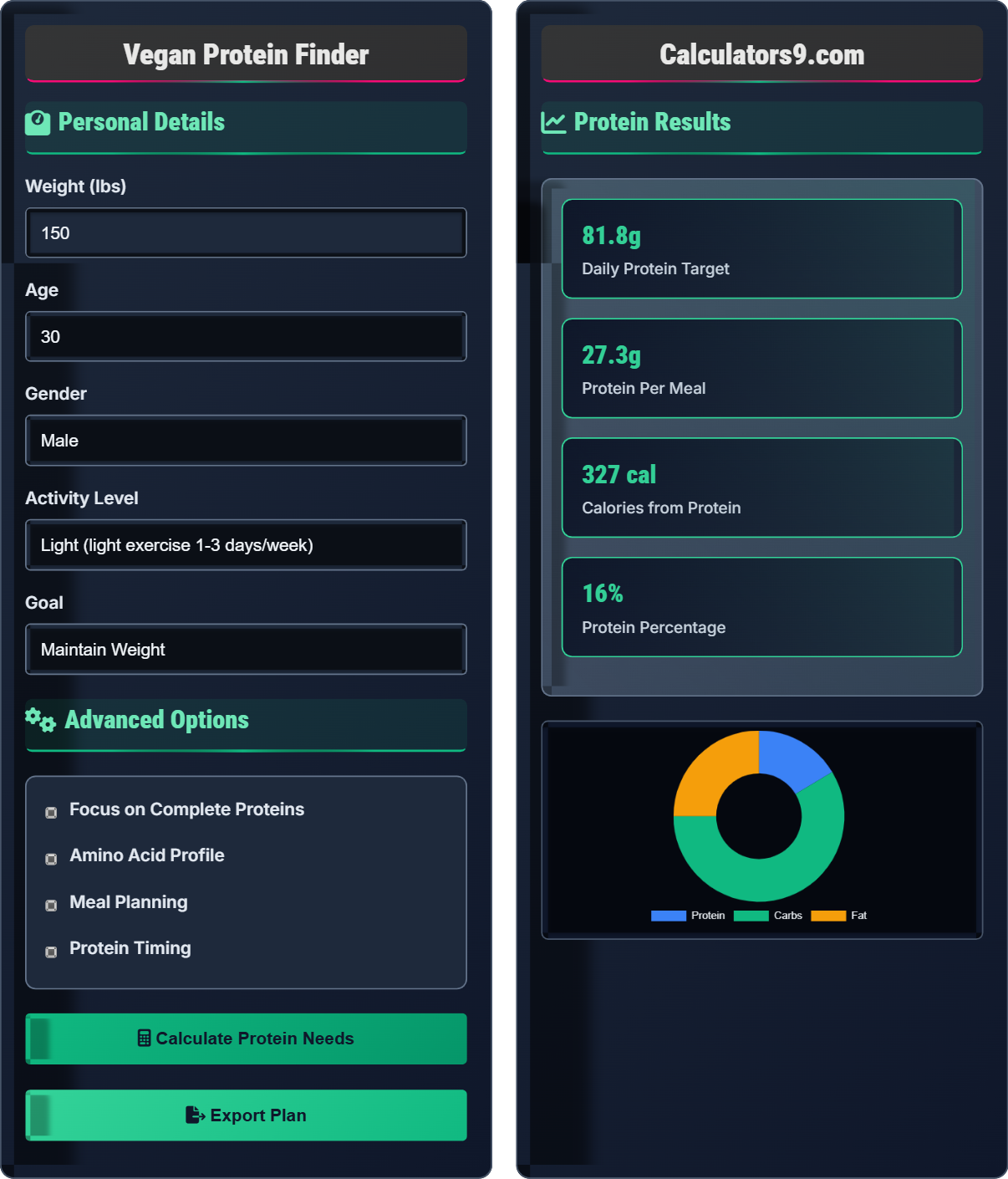
For example, a 150-pound person with moderate activity would need: (150 ÷ 2.2) × 1.4 = 95.5g protein per day.
Q: Are plant proteins as effective as animal proteins for muscle building?
A: Yes, plant proteins can be as effective as animal proteins for muscle building when properly planned. While animal proteins typically have higher leucine content and better amino acid profiles, plant proteins can achieve similar results through strategic consumption.
Key strategies include:
• Consuming 20-30g protein per meal
• Including leucine-rich plant foods (soy, hemp seeds, pumpkin seeds)
• Combining complementary proteins throughout the day
• Ensuring adequate total daily protein intake (1.6-2.2 g/kg body weight)
Research shows that vegans can achieve similar muscle-building results as omnivores when protein intake and timing are optimized. The key difference is that plant proteins may require slightly higher total intake due to differences in digestibility and amino acid composition.
Q: What are the best high-protein vegan foods for beginners?
A: For beginners transitioning to veganism, focus on these high-protein foods that are easy to incorporate:
• Tofu: 20g protein per 4oz serving, versatile and takes on flavors well
• Lentils: 18g protein per cooked cup, excellent in soups, stews, and salads
• Chickpeas: 15g protein per cooked cup, perfect for hummus, curries, or roasted snacks
• Quinoa: 8g protein per cooked cup, complete protein that works as a rice substitute
• Edamame: 17g protein per cooked cup, great as a snack or in stir-fries
• Nutritional yeast: 2g protein per tablespoon, adds cheesy flavor to dishes
Start by replacing one meal per day with a high-protein plant option, then gradually increase as you become comfortable with preparation methods and flavor combinations.