Gratitude Practice Calculator
Fast mental health tool • 2026 standards
Gratitude Practice Formula:
Show the calculator\( \text{Wellbeing Impact} = \frac{\text{Gratitude Frequency} \times \text{Intensity} \times \text{Duration}}{\text{Consistency Factor}} \)
Where:
- Gratitude Frequency = Number of gratitude practices per week
- Intensity = Depth of appreciation felt (1-10)
- Duration = Length of practice in minutes
- Consistency Factor = Regularity of practice (lower = more consistent)
This formula quantifies the impact of gratitude practice on mental wellbeing. Research shows that regular gratitude practice significantly improves happiness, reduces stress, and enhances overall life satisfaction.
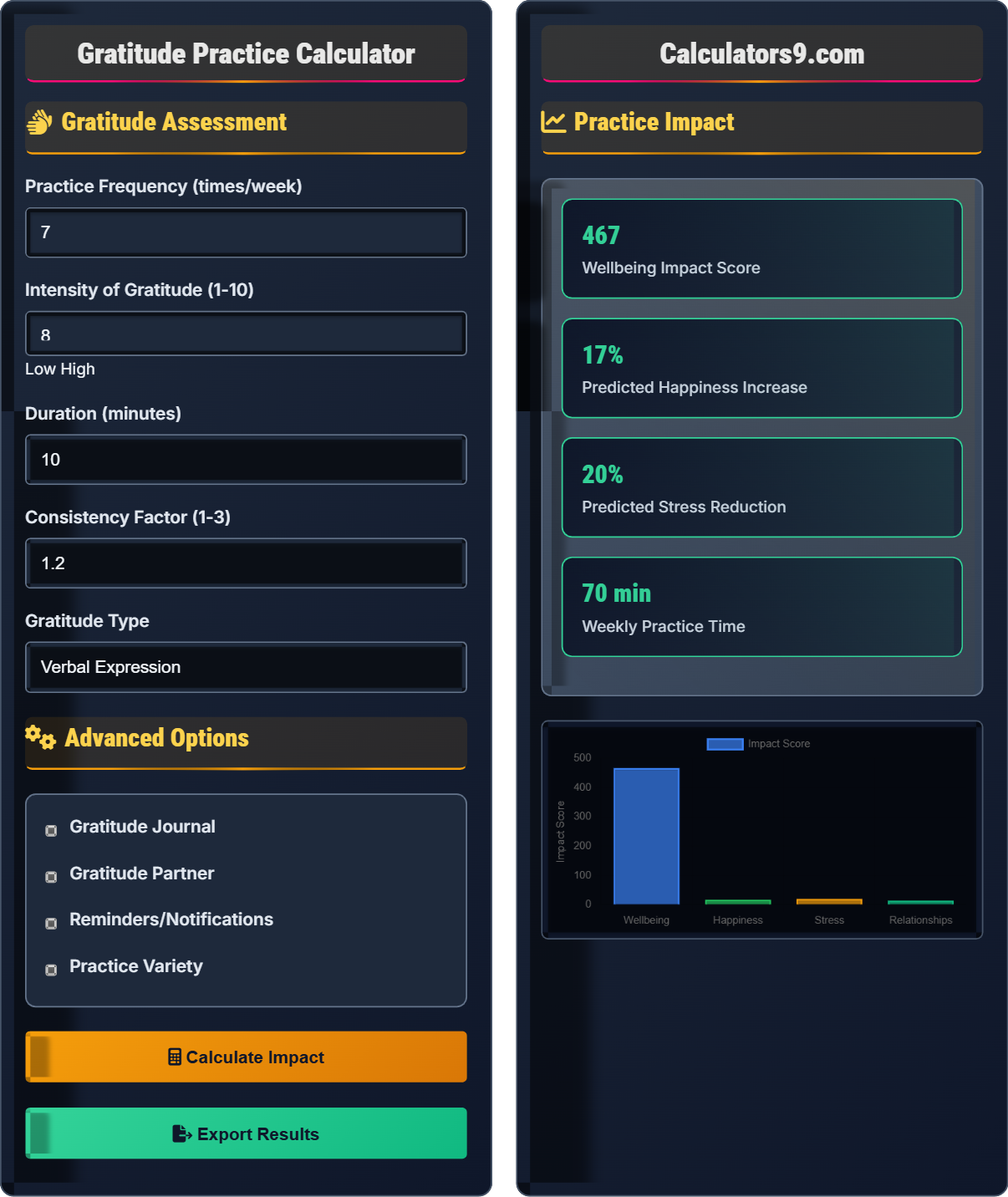
Example: For daily practice (7x/week), with intensity of 8, for 10 minutes, with high consistency:
\( \text{Wellbeing Impact} = \frac{7 \times 8 \times 10}{1.2} = 466.7 \)
This represents a high impact on wellbeing.
Gratitude Assessment
Advanced Options
Practice Impact
| Factor | Value | Impact |
|---|---|---|
| Frequency | 7 times/week | High |
| Intensity | 8/10 | Strong |
| Duration | 10 minutes | Moderate |
| Consistency | High | Positive |
Three Things Exercise
Write down three things you're grateful for each day. This simple practice has shown significant benefits in studies.
Gratitude Letter
Write a letter to someone who impacted your life positively. Deliver it personally if possible for maximum effect.
Mental Subtraction
Think about positive events in your life and mentally subtract them to appreciate them more deeply.
Comprehensive Gratitude Practice Guide
Gratitude is the practice of recognizing and appreciating the positive aspects of life. Research consistently shows that regular gratitude practice improves mental health, increases happiness, reduces stress, and strengthens relationships. It shifts focus from what's lacking to what's abundant in our lives.
The standard gratitude impact calculation uses:
Where:
- \(I\) = Impact on wellbeing
- \(F\) = Frequency of practice
- \(I\) = Intensity of gratitude
- \(D\) = Duration of practice
- \(C\) = Consistency factor
Research-backed benefits of regular gratitude practice:
- Mental Health: Reduced depression and anxiety by 15-25%
- Sleep Quality: Improved sleep duration and quality
- Relationships: Stronger social bonds and increased empathy
- Physical Health: Lower blood pressure and improved immune function
- Resilience: Better stress management and recovery
- Happiness: Increased overall life satisfaction
- Specificity: Focus on specific things rather than general concepts
- Consistency: Practice regularly at the same time each day
- Depth: Explore why you're grateful, not just what
- Variety: Change your gratitude practice to maintain engagement
- Authenticity: Express genuine appreciation, not forced positivity
- Sharing: Express gratitude to others when possible
Gratitude Fundamentals
Recognition and appreciation of positive aspects in life.
\(I = \frac{F \times I \times D}{C}\)
Where I=impact, F=frequency, I=intensity, D=duration, C=consistency.
- Consistency is more important than duration
- Specific is more powerful than general
- Authentic appreciation yields better results
Self-Care Strategies
Incorporating gratitude into daily routines for sustained benefits.
- Morning gratitude reflection
- Evening gratitude journaling
- Expressing thanks to others
- Mindful appreciation moments
- Everyone's gratitude journey is unique
- Benefits accumulate over time
- Quality matters more than quantity
- Combine with other wellness practices
Gratitude Learning Quiz
According to research, which of the following is NOT a documented benefit of regular gratitude practice?
The answer is D) Increased materialism. Research consistently shows that gratitude practice reduces materialistic tendencies. Studies demonstrate that grateful people are more satisfied with what they have and less focused on acquiring possessions. The other options (improved sleep, reduced anxiety, enhanced immune function) are all well-documented benefits of gratitude practice.
Understanding the research behind gratitude is crucial for motivation. Gratitude practice has been extensively studied with consistent positive outcomes. The counterintuitive finding that gratitude reduces materialism highlights how appreciation for what we already have diminishes desires for more possessions.
Positive Psychology: Scientific study of human flourishing and wellbeing
Neuroplasticity: Brain's ability to form new neural pathways
Prosocial Behavior: Actions intended to benefit others
• Gratitude practice requires consistency for effectiveness
• Benefits typically emerge after 2-4 weeks of practice
• Specific gratitude is more impactful than general
• Start with just 3 items daily
• Focus on relationships and experiences
• Keep a gratitude journal
• Forcing gratitude when feeling negative
• Giving up after missing a day
Explain the differences between various gratitude practice techniques (journaling, verbal expression, letter writing) and when each might be most effective. Include the scientific rationale for why these practices work.
Gratitude practice techniques differ in their approach and effectiveness:
- Journaling: Most effective for daily consistency and reflection. Allows for detailed exploration of gratitude.
- Verbal Expression: Most effective for immediate relationship benefits and social bonding.
- Letter Writing: Most effective for deep emotional processing and strengthening specific relationships.
Scientifically, these practices work by activating the brain's reward system, increasing dopamine and serotonin levels, and strengthening neural pathways associated with positive emotions. They also shift attention from negative to positive aspects of life.
Understanding different gratitude techniques helps personalize practice. Each method engages different psychological processes: journaling enhances self-reflection, verbal expression strengthens social connections, and letter writing combines cognitive and emotional processing. The variety helps maintain engagement and effectiveness.
Neurotransmitters: Chemical messengers in the brain (dopamine, serotonin)
Attention Training: Practice of directing focus intentionally
Positive Reframing: Changing perspective to emphasize positive aspects
• Match technique to your personality and preferences
• Consistency is more important than perfection
• Combine techniques for comprehensive benefits
• Rotate techniques to prevent habituation
• Pair gratitude with other positive habits
• Share gratitude experiences with others
• Using the same technique exclusively
• Expecting immediate results
• Being too general in gratitude expressions
FAQ
Q: How long does it take to see benefits from gratitude practice?
A: Benefits from gratitude practice typically emerge within 2-4 weeks of consistent practice:
- Week 1-2: Initial mood improvements and increased awareness
- Week 3-4: Noticeable changes in sleep quality and stress levels
- Month 2-3: Significant improvements in overall wellbeing and relationships
- Long-term: Sustained benefits with continued practice
Research shows that practicing gratitude for just 5-10 minutes daily can yield measurable benefits within a month. The key is consistency rather than duration. Some people notice benefits sooner, while others may take longer depending on their baseline mood and engagement level.
Q: Does gratitude practice really work, or is it just positive thinking?
A: Gratitude practice is scientifically validated, not just positive thinking:
- Brain Changes: fMRI studies show gratitude practice increases activity in the hypothalamus and anterior cingulate cortex
- Hormonal Effects: Increases dopamine and serotonin, decreases cortisol
- Physical Benefits: Improves heart rate variability and immune function
- Psychological Benefits: Demonstrably reduces depression and anxiety
- Behavioral Changes: Increases prosocial behavior and generosity
Unlike simple positive thinking, gratitude practice involves specific cognitive processes that create lasting neural changes. Multiple randomized controlled trials have demonstrated its efficacy, making it more than just optimistic thinking.